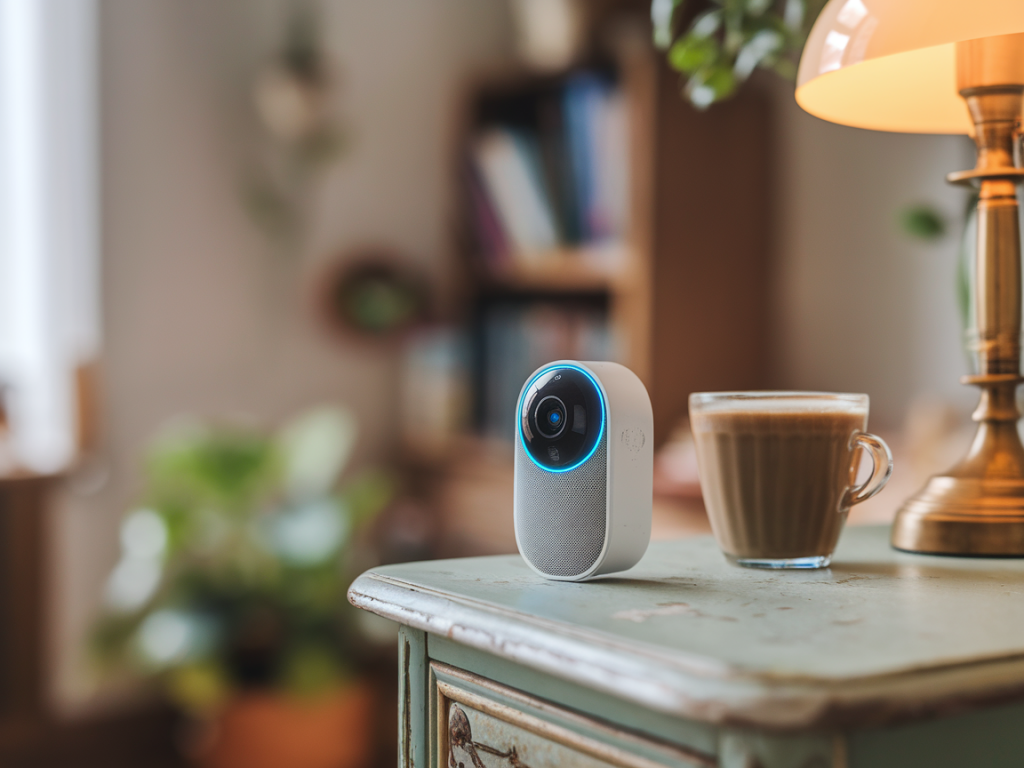
I’ve been obsessed with the idea that real intelligence doesn't have to live in the cloud. Watching devices that run for years on coin cells or tiny LiIon packs do genuinely useful, low-latency inference has felt like a slow-moving revolution for the last few years. TinyML — machine learning that runs on microcontrollers and other highly constrained devices — is finally crossing the threshold from clever demos to real products. In this piece I want to explain why that matters, how engineers actually make it happen, and what trade-offs you should expect when you want real-time AI on battery-powered gadgets.
What do people mean by "TinyML" and "real-time"?
TinyML refers to ML models and runtimes designed to run on devices with very limited CPU, memory (often hundreds of kilobytes), and power budgets. Think Arm Cortex-M-class microcontrollers, tiny DSPs, or purpose-built NPUs that consume milliwatts. "Real-time" here usually means latency that’s low and predictable enough for the interaction — from sub-100ms response for audio wake words to a few hundred milliseconds for gesture recognition or anomaly alerts. For some sensor-based tasks, real-time can also mean detecting an event within a power-aware sampling window so you don’t miss it.
Why TinyML is now realistic for battery-powered gadgets
Several practical factors converged to make TinyML viable:
Hardware advances: Low-power microcontrollers (Ambiq Apollo, Nordic nRF52/nRF53, STM32L series) and tiny neural accelerators (Syntiant NDP, Kendryte-like NPUs) provide more MACs per milliwatt than before. Many MCUs now ship with DSP instructions and FPU options that significantly speed up inference.Optimized toolchains: Frameworks like TensorFlow Lite for Microcontrollers, CMSIS-NN, ONNX runtimes, and Edge Impulse provide the conversion and optimization paths to squeeze models into flash and RAM while keeping performance usable.Model techniques: Quantization, pruning, architecture search, and tiny-first model designs (eg. depthwise separable convs, DS-CNN for keyword spotting) let us trade a tiny fraction of accuracy for large gains in memory and energy.Event-driven design: Designers now avoid sampling and inference continuously. They use interrupt-driven sensors, hardware wake-up sources, and hierarchical processing so the MCU only wakes the heavy-lifting path when necessary.Put together, these make it possible for a motion sensor to run gesture recognition at 10s of inferences per second while the gadget still ships with months of battery life.
Common TinyML use cases that need real-time responses
Voice wake words and command parsing on wearables and smart speakers (local, privacy-preserving keyword detection).Anomaly detection for industrial sensors — detect a vibration spike or temperature deviation and alert before damage.Gesture recognition for earbuds or remotes — fast, local response without round-trip latency.Predictive sensor fusion in wearables — combine accelerometer and heart-rate features locally to trigger a safety alert.Always-on baby monitors or health sensors that must filter important events and avoid false alarms while conserving power.Key constraints — and how to address them
When you target battery-operated gadgets, the usual ML playbook needs adaptation. Here are the main constraints and pragmatic tactics I've used or seen work in the field:
Compute: MCUs have limited cycles and no big caches. Use compact architectures (tiny CNNs or shallow MLPs), leverage CMSIS-NN/accelerated ops, or pick an MCU with an NPU/DSP if your workload justifies it.Memory: Flash and RAM are tiny. Quantize models to int8 or even lower-bit formats, and use streaming or tiled inference to avoid loading large buffers.Power: Energy per inference matters. Reduce sample rate, use event-triggered sensing, batch computations when possible, and use hardware timers/DMA to avoid waking the CPU.Latency: Real-time applications need bounded latency. Aim for predictable pipelines: small deterministic models, avoid dynamic heap allocations, and prefer inference architectures that map well to the hardware.Reliability: Devices must behave across temperature, battery voltage, and sensor noise. Test with realistic data, augment training to simulate environmental changes, and include fallback rules in firmware.Practical techniques that make real-time TinyML feasible
Here are specific techniques you can apply right away.
Quantization: Convert weights and activations to int8 or uint8. Quantized inference often runs several times faster and uses less memory. TensorFlow Lite Micro and CMSIS-NN both support quantized models.Pruning and sparsity: Remove redundant weights or use structured pruning to shrink model size. Beware that unstructured sparsity may not speed up inference unless the hardware supports sparse ops.Model distillation: Train a small model supervised by a larger teacher model to retain higher accuracy in a compact form.Feature engineering at the edge: Compute robust features (MFCC for audio, statistical window features for accelerometers) on the MCU before the classifier. Often, the feature extractor costs less energy than a large model and improves robustness.Event-driven sensing: Use hardware comparators, low-power motion engines, or passive IR triggers to avoid constant sampling. Only wake the main MCU when there's an interesting event.DMA, timers, and sleep states: Use DMA to move sensor data while the CPU sleeps. Configure low-power states properly so the device only consumes milliwatts or microwatts when idle.Use accelerators wisely: If your chip has a tiny NPU or DSP, measure energy per inference on that unit — it’s often far better than running on the M4 core.Tooling and platforms I recommend exploring
It’s now easy to prototype TinyML with off-the-shelf boards:
Arduino Nano 33 BLE Sense — great for audio and IMU experiments with TensorFlow Lite Micro.Raspberry Pi Pico W — affordable, but pure RP2040 needs careful optimization for ML throughput; good for rule-based hybrid flows.Edge Impulse — excellent for data collection, model building, and deploying optimized firmware to MCUs and tiny NPUs.Syntiant NDP devices — purpose-built for always-on audio inference with ultra-low energy per inference.TinyML frameworks — TensorFlow Lite for Microcontrollers, CMSIS-NN (for Arm MCUs), and ONNX runtimes for embedded targets.Security and privacy considerations — why local inference helps, but doesn’t absolve you
Running inference locally keeps raw sensor data off the cloud, which is huge for privacy. But you still need to defend the device:
Protect model IP: models embedded in firmware can be extracted from flash — consider encryption and secure boot.Patchability: devices in the field need secure OTA update paths for model and firmware updates.Adversarial robustness: even tiny models can be fooled by crafted inputs. Validate with adversarial testing and add simple sanity checks.When TinyML isn’t the right tool
TinyML is powerful, but it’s not a panacea. Don’t push TinyML when you need:
Very high accuracy that requires large models (eg. full natural language understanding).Continual learning on-device with significant model updates — on-device training on MCUs is still very limited.Complex multi-sensor fusion requiring large feature extractors and long temporal context — sometimes a hybrid approach (edge prefiltering + cloud processing) is better.How I prototype and measure success
When I explore a new TinyML use case, I follow a reproducible checklist:
Collect realistic data across the full battery and environmental envelope I expect the product to see.Prototype several model architectures (tiny CNN, DS-CNN, small RNN/TCN) and evaluate both accuracy and memory/latency on-device using representative inputs.Measure energy per inference and idle power to compute expected battery life under a realistic duty cycle.Iterate on sensor strategy — often reducing sampling frequency or changing the trigger strategy yields the biggest energy wins.There’s a kind of delight in hearing a device respond instantly without a network light turning on. TinyML brings responsiveness, privacy, and lower operating cost to battery-powered gadgets — and the ecosystem finally has the hardware and software maturity to make those promises real in products, not just lab demos. If you’re starting a project, pick a supported MCU, collect good data early, and measure energy as obsessively as accuracy. The rest is engineering — and a lot of fun.